Knick Global

Healthcare Technology

Multiplayer Games !knick global
3D Game Development, AR Development, Augmented reality, blockchain game development services, casino game, casino game development, Game Designer, Game Development, Healthcare Technology, Metaverse, NFTs, online casino game, Uncategorized, Unity, Video Game

How to Design Multiplayer Games That Won’t Exceed Your Budget

The fun of designing a multiplayer game lies in it, but keeping to the budget is usually a big challenge. With good planning and smart choices, you can create fun multiplayer games for iOS and Android game development services without overspending. Here’s how you can design multiplayer games well while using your resources carefully. 1. Start with a Clear Idea A good multiplayer game starts with a clear and simple idea. Do not try to make everyone happy by adding too many features. Instead, find out who is going to play your game and design it with them in mind. Define what makes your game special from day one to make development easier and avoid expensive changes later down the road. Tips: Focus on one or two main gameplay features. Determine current iOS and Android trends in game development to ensure that your idea would appeal to your target audience. 2. The Right Game Engine Select the game engine suitable for your budget and project size. Unity and Unreal Engine are two of the most popular because of their multi-player capabilities, as well as cross-platforming for iOS and Android. The free tiers both offer can greatly reduce initial expenses. Tips: Use open-source tools whenever appropriate. Leverage the pre-made assets found within the marketplace in the engine to cut down on development time. 3. Focus on Core Features Another common problem in the process of creating games is called feature creep. As with the cost control, the key to success is to release the essential gameplay first and all the rest can be added later through updates and expansions if necessary. Tips MVP: Launch the Minimum Viable Product Learn to distinguish which of these features are necessary to be implemented into the game. 4. Cross-platform development Most developers nowadays develop one game, it will be okay to have a single game that runs well on both iOS and Android. For example, Unity and Xamarin are kinds of cross-platform development because they allow you to code, and then reuse it on a different platform. TipsTo run on both platforms, test early and often. Think of the special demands made by the iOS and Android platforms to prevent compromising the devices’ performance. 5. Create a Multiplayer System that is Scalable Stellar and robust MP assures the game’s capacity to support more players at a lower cost. Services such as AWS GameLift or Google Firebase are cheap ways to host or match the players. Tips: Decentralized, or peer-to-peer, networks should be implemented in cases where an organization offers smaller games in order to minimize the expenses on legal server space. Monitoring the servers regarding usage is important to avoid wastage of the available resources. 6. Make Money Smartly Instead, monetization is a way to cover the costs of development, however, do not offend the players. The three most used models are purchases in the game, advertisements, and skins or passes. Choose one according to what your game looks like and what the audience prefers. Tips: Do not make cosmetic items or anything else extra content pay-to-win. This meant that there should be regular updates on the monetization to make players have an interest in it. 7. Outsource Smartly It is reasonable to hire outsiders or to trust paid Android and IOS game development services for such concerns since outsourcing costs may be more efficient for specific occupations like art, sound editing, or quality control. In your case, be keen and only select outsourcing partners who have worked on multiplayer games before. Tips: Since some projects may extend beyond their original planned capacity it is essential to ensure that the outsourced tasks are clearly defined so that they do not expand their work. Having said that, social media freelance platforms are cheaper as compared to traditional sources of talent. 8. Optimize for Performance That is why multiplayer games need to function properly on various devices to retain gamers. Improve your game’s graphics, its loading times and make its online abilities much better for those who play it on iOS and Android. Tips: Run your game on low-end and look for the problems that caused their performance to be poor. Employ Unity’s Profiler for fetal expression to take care of performance. 9. Create a Community Creating a strong community of players will keep the players engaged and coming back for more of the game instead of having to spend so much money on advertising the games. Interact with the players in the forum, using cover names on Facebook and Twitter and in-game events. Tips: Encourage the players to bring other players. People kept saying that my game was entertaining and very much genre-appropriate. Well, if this is what people are feeling about our game, then there is no reason as to why we can’t incorporate these strategies in retaining the loyalty of more players. 10Track Expenses and ROI Continual budget surveillance is important when the physical development process is concerned. Employ business tracking tools that will help you negotiate and determine the return on investment (ROI) of the money you spend. Tips: Plan daily, weekly, or monthly budgets to be able to ascertain overspending. Study player statistics for future upgrades and expansion of the game. Contact us!   Frequently Asked Questions Q 1. Which type of technology should be used in the development of numerous games that can be played in multiplayer mode across various platforms? For cross-platform multiplayer games, Unity and Unreal Engine are normally the better pick because of the great docs, super fun and functionality, and being able to publish to iOS and Android. Q 2. What ways are there to cut the cost of servers? Such solutions as AWS GameLift, GameSpree, and Google Firebase are examples of networking services that eliminate server costs. Sharing of a player’s resources among multiple players, and resource expansion and contraction depending on the number of active players. Q 3. In terms of people and the type of game, I believe that the four ways of


Online plyaing cards Gambling game! knick global
3D Game Development, AR Development, Augmented reality, blockchain game development services, casino game, casino game development, Game Designer, Game Development, Healthcare Technology, Metaverse, NFTs, online casino game, Unity, Video Game

Exploring A23 Rummy and the Best Alternatives: An In-Depth Guide

Recently several new rummy games were Apps that provided gamblers the various games to play and delight in. There is a platform that caught all the hearts – and it is A23 Rummy. Here, people enjoy this rummy game at their homes; however, how does the A23 Rummy stand out from others in the crowd of online rummy platforms available in the world? Which other options are more suitable for players who would like to have some interaction of both types? This guide goes deeper into the evaluation of A23 Rummy and includes some of the best options for players who want to try more. What is A23 Rummy A23 Rummy is the platform for live games that provides real rummy play options to the clients. Related to it comes up with as much fun and competition as the users get in real-time offline versions of rummy games. Desktop and mobile compatible, this app will ensure players are refreshed anytime they so wish. The technical skill game that requires a player to form sequences or sets of cards is called rummy. A23 Rummy provides many types of games by help of which one player can select any game based on his type of interest. This includes pool rummy, points rummy, and the standard rummy. It allows users to play and compete with people in the nation competitively, through real-time gaming. Also, it further helps players actively contribute to the game by offering practice and paid games. The user interface of A23 Rummy is quite friendly and simple, designed in such a manner that no concepts are complicated and anyone can navigate through the platform easily, which is one of its strengths. Indeed, A23 Rummy offers a good feeling of playing the game in case one will be doing it for entertainment or if one is exploring the software in an effort to walk away with a good amount of money. Features of A23 Rummy Contemplates variations of the Gambling games to include Points Rummy Pool Rummy or Deals Rummy. This would mean the options can be taken by the players in a way that would make them according to their skill sets as well as playing strengths. Real-Time Multiplayer A23 Rummy allows users to take on directly; if one wants to challenge others at a multiplayer, there may be a battle in progress. User-friendly interface: For a first-time player in rummy, the rules of the game may be easily explained and one can start playing on the website easily due to the use of an appealing interface. Safe transactions: A23 Rummy provides its players an opportunity to play for real money with ease and security at the payment gateways. 24/7 Customer support: To ensure a completely flawless game, A23 Rummy offers customer support 24/7 so that all issues concerning any issue faced by them are addressed. Bonuses and Rewards: A23 Rummy pays players different types of bonuses and promotions, which include welcome bonuses, loyalty points, referral bonuses, and more. Mobile and Desktop Compatibility: A23 Rummy has a mobile application for Android and iOS, so players can get to the game from their devices, as well as players have Web access to get into the game. Why A23 Rummy is So Popular Among Gamblers This is so because there are both friendly and bet games and hence why gamers prefer it.  A23 Rummy – Best site alternative Nonetheless, that is an excellent game like A23 Rummy, one wants to traverse through several others that contain special characteristics or kinds of Gambling Game in it. Here are a few of the best Alternatives to A23 Rummy for anyone who’s in search of variations in their playing journey: 1.RummyCircle RummyCircle is one of the largest and most secure online rummy portals in India. This online rummy portal has a rummy games collection in points rummy, pool rummy, and deals rummy games. This online rummy site is liked for having high-quality gaming and providing a good, smooth slant to it. Its graphic quality, in particular, is highly smooth while its connection type is truly seamless.   Key Features:  There are quite several rummy games available Nowadays Navigation is easy with the snag, which is related to the unique and user-friendly structure of the site. Safety and integrity in the exchange of products Incentives and incentives that relate to enthralling player promotions 24/7 customer support. RummyCircle has many people using it, so you won’t look for people to play with. Far from arbitrary, it is well known as a good home of fair and transparent games, which makes it a believable platform that one can rely on for A23 Rummy. 2. Junglee Rummy Junglee Rummy is another good option one can have fun playing rummy online. Is also known for its distinctive variations and types. Junglee Rummy allows using to play his preferred card game while attempting to win real money. Key Features: High-definition gaming: High-quality game interface with No lagging. Only free and cash rummy games are available at Junglee Rummy Bonus and promotions on the game every day. Junglee Rummy accepts methods of payments that are fully safe to make transactions with. HTML 5-based and supports Android and iOS-based apps. 3. Ace2Three (A23) However, A23 Rummy is the company’s bestselling product but Ace2Three commonly known as A23 has some of its features different from the other company’s rummy games. This is among the oldest rummy sites on the internet, but it is still thrilling for anyone who uses it. Important Features: There are many types of rummy games offered. It has a very simple graphic user interface. It often holds competitions for which participants can win monetary prizes. A highly secure platform with a highly transparent process. But then again, if you have played A23 Rummy, you will be quite familiar with Ace2Three – similar, yet somewhat different – which only makes this a good option for those players who have some experience playing the game. 4. Rummy Passion Rummy Passion is a

Poker logo by Knick Global: Sleek, modern design for top-tier gaming experiences
3D Game Development, AR Development, casino game, casino game development, Game Designer, Game Development, Healthcare Technology, Metaverse, NFTs, online casino game, Unity, Video Game

How to Develop a clone app like 888Poker?

Developing a clone app similar to 888Poker is an ambitious but rewarding venture. Being one of the leading online poker platforms, 888Poker has raised the bar on user experience, game variety, and reliability. To replicate the success of this application, one must plan and develop it carefully while following all regulations in marketing it. This blog outlines how to build a poker app through discussions of Android and iOS game development, gambling game compliance, and more. 1. Poker App Planning Know Your Market You will research the online poker market to find your target audience, competitors, and trends. Identify what makes 888Poker successful: its game modes, user interface, and promotional strategies. Core Features Your poker app should include the following: Game Variety: Texas Hold’em, Omaha, and tournaments should be included. Real-Time Multiplayer: Allows smooth gameplay among users across the globe. Secure Payment Options: Enable easy deposits and withdrawals. Engaging User Interface (UI): make it simple to navigate while making it pretty. Cross-Platform Compatibility: enable play on the web, iOS, and Android. Compliance and Licensing Adhere to gambling Game regulations in your target markets. Obtain relevant licenses, such as those issued by the UK Gambling Commission, Malta Gaming Authority, or similar. 2. Best Technologies Live Multiplayer Gaming Implementations with PUN, Firebase Realtime Database, or Socket.IO are great examples of real-time multiplayer gaming technologies. These libraries ensure that all the actions done by the player are synchronized with others, maintain latency, and hence give a lag-free experience. Game Engine Cross-platform development is done with Unity and Unreal Engine, which offer all the tools required for deep 3D graphics and animation, making sure they have good performance on Android game development, iOS, and web platforms. Server-Side Coding For server-side scripting, use Node.js or Python. Implement databases like MongoDB or PostgreSQL to store user data. Scale up through cloud platforms, such as AWS or Google Cloud. Security Protect user information through end-end encryption and SSL certificates. Develop anti-fraud measures against cheating and fraud to play fair. 3. How to Develop Your Poker Application Prototyping and UI/UX Design Wireframe and mock up the layout of the app. The interface needs to be intuitive, targeting novice as well as experienced players. Figma and Adobe XD are good tools to get this done. 2. Development Frontend Development: Cross-platform development: React Native or Flutter Backend Development: API for authentication, game rule, payment processing Game Logic: Poker rules with hand rankings and dealer requirements have to be incorporated appropriately with efficient algorithms. 3. Testing The application should be tested adequately to identify bugs and remove them completely. It can be tested through automated tools like Appium and TestFlight and also through manual testing. 4. Launch and Maintenance Publish the app in the Google Play Store and Apple App Store. Improve the app by incorporating new features and security patches as received through user feedback. 4. International Gambling Regulation Compliance Compliance is a necessity for a gambling application. The important steps are as follows: License: Obtain the license to conduct gambling in every targeted region. Age Verification: Have strong mechanisms for age verification to prevent underage gambling. Fair Play: Use RNGs certified by recognized agencies. Data Protection: Follow GDPR, CCPA, and other data protection laws. 5. Creating an Engaging User Interface An engaging UI can differentiate your app from others. Here are some tips: Visual Appeal: Use high-quality graphics and animations to create a realistic poker environment. Easy Navigation: The application should ensure easy navigation for the users to games, tournaments, and account settings. Customizations: Allow the user to personalize avatars, tables, and game settings. Feedback: Integrate haptic feedback and sound effects for the ultimate gaming experience. 6. Marketing Strategies Engagement of Gamers Social Media Campaigns: Promote your app on Facebook, Instagram, and Twitter. Influencer Partnerships: Partner with poker influencers and streamers to reach a large audience. Referral Programs: Reward the current users to invite friends by providing them with incentives. Retention of Gamers Loyalty Programs: Reward the frequent players with bonuses and special perks. Updating Routine: Add and release new game modes and exciting features to be able to get new freshness going throughout the app. Push Notifications Updating users about tours, offers, and updates. 7. Secure Payments Introducing payments that are protected will help raise trust with users.  Payment Gateways Use tried ones such as PayPal, Stripe, or Razor Pay. Cryptocurrencies In this case Bitcoins and Ethereum work Fraud prevention The best way this application would be would be to add multi-factor authentification besides the transaction alert. Follow these steps and strategies to help you develop a robust and engaging poker app that competes with industry leaders like 888Poker. Frequently Asked Questions Q. Which technologies you would recommend to implement real-time multiplayer gaming for poker apps? The above-mentioned technologies, are Firebase Realtime Database, and Socket. IO-are the best due to low latency and scalability to support real-time multiplayer games. Q. How would I create a cross-platform poker application for web, iOS, and Android? Use cross-platform development game engines such as Unity or Unreal Engine, and combine these with frameworks such as React Native or Flutter for a seamless integration across devices. Q. What should be done to comply with international gambling regulations? Obtain the necessary licenses, implement age verification, ensure RNG certification, and comply with data protection laws like GDPR and CCPA. Q. How can an engaging and intuitive user interface for a poker app be created? Visual appeal, easy navigation, and customization options are key. Use feedback mechanisms such as haptic responses and sound effects to enhance the user experience. Q. What marketing strategies can help attract and retain players in a competitive poker market? Social media campaigns, influencer partnerships, referral programs, and loyalty rewards can attract and retain players. Q. How do I implement secure payment methods for deposits and withdrawals in the app? Use trusted payment gateways like PayPal, Stripe, or Razorpay. Provide multi-factor authentication and track transactions for fraud prevention.

3d game development
3D Game Development, Game Development, Healthcare Technology, Video Game

Unveiling the Future of Gaming: 3D Game Development and its Revolution

The world of gaming has experienced remarkable growth over the years, transforming from pixelated characters on simple screens to immersive 3D worlds where players can dive into a realistic and thrilling experience. At the heart of this revolution is 3D game development, a process that brings life to games, making them engaging and visually appealing. As technology advances, the demand for 3D game development services continues to skyrocket, with both casual gamers and professional players expecting high-quality gaming experiences. Whether it’s for PC, console, or mobile platforms, 3D games dominate the market. In this blog, we will explore the intricacies of 3D game development, the specific needs of 3D mobile game development, and how professional 3D game development companies offer cutting-edge services that cater to the evolving demands of the gaming industry. Understanding 3D Game Development: The Foundation of Immersive Experiences 3D game development is the process of creating games that utilize three-dimensional space. Unlike 2D games that operate on flat planes, 3D games have depth, allowing players to interact with objects and characters in more realistic environments. Key Elements of 3D Game Development: Modeling: The process of creating 3D characters, environments, and objects. Animation: Giving movement to these characters and objects to make them appear lifelike. Physics Engines: Simulating real-world physics to ensure that interactions between characters and environments are natural. Lighting & Texturing: Adding realism by using advanced lighting techniques and surface textures. Scripting & Programming: Implementing the logic and mechanics of the game. By combining these elements, 3D game development services create engaging and immersive experiences that players can lose themselves in. The success of games such as Fortnite, Call of Duty, and FIFA lies in their ability to merge high-quality 3D graphics with dynamic gameplay. The Rise of 3D Mobile Game Development As smartphones and tablets have evolved, mobile games have seen a significant leap in quality and performance. While the mobile gaming market was once dominated by simple 2D games, advancements in hardware now allow for complex 3D mobile game development, which is reshaping the landscape of mobile entertainment. Why 3D Mobile Games are Gaining Popularity: Immersive Gameplay: The introduction of 3D elements makes mobile gaming much more engaging and interactive. Improved Hardware: With the release of high-powered smartphones, developers can now build detailed 3D environments without compromising performance. Augmented Reality (AR): Technologies like AR (used in Pokémon Go) are bringing a new dimension to mobile gaming by blending the virtual with the real world. Increased User Retention: The more immersive and visually appealing a game, the more likely users are to return and spend money in-game. Developing 3D mobile games comes with unique challenges, including optimizing for different screen sizes and maintaining performance on less powerful devices. However, professional 3D game development services address these challenges with expertise, ensuring that games run smoothly and deliver high-quality visuals. Choosing the Right 3D Game Development Services for Your Project If you’re looking to develop a 3D game, partnering with a professional 3D game development company is essential. Not all development teams are created equal, and choosing the right service provider can make or break your project. Here are a few key factors to consider when selecting a 3D game development service: 1. Experience in 3D Game Development When choosing a development company, it’s crucial to find one with a proven track record in 3D game development. Experience brings an understanding of the nuances of the industry, as well as insights into what makes a game both enjoyable and technically sound. 2. Technological Expertise 3D game development requires a range of technologies and software, from game engines like Unity and Unreal to modeling tools like Blender and Maya. A proficient 3D game development company should be well-versed in these tools to ensure high-quality outcomes. 3. Platform-Specific Knowledge Different platforms require different approaches. A company that specializes in 3D mobile game development should understand the intricacies of mobile hardware, optimization, and user experience. 4. Creativity and Innovation In a saturated market, your game needs to stand out. Partnering with a company that prioritizes creativity and innovation ensures that your game will have unique mechanics, compelling stories, and innovative features. 5. Post-Launch Support The game development journey doesn’t end at the launch. The right 3D game development services should offer post-launch support, including bug fixing, updates, and content expansion to keep your game fresh and engaging for players. Why Partner with a 3D Game Development Company? While independent game development is possible, hiring a professional 3D game development company offers several advantages. From their deep industry knowledge to cutting-edge tools and techniques, development firms can accelerate the process, increase efficiency, and ultimately, improve the quality of the final product. Benefits of Hiring a Professional 3D Game Development Company: Efficiency: Professional teams streamline the development process with established workflows, ensuring that deadlines are met. Cost-Effective: While hiring a full team might seem expensive, the savings in time, resources, and post-launch fixes often outweigh the upfront costs. Quality Assurance: From testing for bugs to ensuring the game is optimized for various platforms, a professional team will ensure your game is release-ready. Scalability: Need to update your game post-launch? A dedicated 3D game development company will have the resources to scale your game with new content, features, and platforms. The Future of 3D Game Development With technological advancements like AI, virtual reality (VR), and AR continuing to push the boundaries of what’s possible, 3D game development is on an exciting trajectory. The future of gaming will likely see even more immersive experiences, from hyper-realistic graphics to highly interactive environments that react to player decisions in real time. As the demand for immersive games grows, the need for 3D game development services will only expand. Whether you’re aiming to create a blockbuster console game or a captivating mobile experience, aligning yourself with a reliable 3D game development company is essential to bring your vision to life. Conclusion: Elevate Your Gaming Project with Knick Global’s 3D Game Development Services Looking to take your

Spatial AR
AR Development, Healthcare Technology

How AI Powered Spatial AR for Education?

In the ever-evolving landscape of education, technology continually reshapes the way we learn and teach. Among the most exciting developments is the rise of AI-powered spatial augmented reality (AR). This cutting-edge technology is not just a futuristic fantasy; it’s actively transforming educational environments, making learning more engaging, interactive, and personalized.  By blending artificial intelligence with spatial AR, educators and students are discovering new ways to interact with content and each other, breaking down traditional barriers and creating immersive learning experiences. In this blog, we’ll explore how AI-powered spatial AR is revolutionizing education, diving into its benefits, applications, and the future potential it holds. Let’s embark on this journey into the world where technology meets education in extraordinary ways. What is AI-powered spatial AR? At its core, AI-powered spatial AR is an integration of artificial intelligence with augmented reality that enhances the way we perceive and interact with digital information in real-world environments. Unlike traditional AR, which overlays digital information on the physical world, spatial AR takes this a step further by understanding the spatial context around us. This means it can provide more intuitive, context-aware interactions based on the physical surroundings. Components of AI-Powered Spatial AR To appreciate the impact of AI-powered spatial AR, it’s important to understand its components. The blend of AI algorithms and spatial computing technologies creates a powerful combination. AI algorithms analyze vast amounts of data to predict, interpret, and respond to user actions in real time. Spatial computing, on the other hand, involves technologies that map and understand the physical space around us. Together, they enable AR systems to offer highly interactive and adaptive experiences. AR devices, such as smart glasses and mobile devices, play a crucial role in delivering these experiences. They render the augmented elements and interact with the AI system to provide a seamless and immersive experience. Benefits of AI-Powered Spatial AR in Education Enhanced Learning Experiences Spatial AR for Education transforms traditional learning by providing immersive simulations and interactive content. Imagine a history class where students can virtually walk through ancient cities or a science lesson where they can interact with molecular structures in 3D.  This level of interaction makes abstract concepts tangible, deepening understanding and retention. Real-time feedback allows students to explore and learn at their own pace, while adaptive learning systems adjust content based on individual progress. Improved Engagement and Motivation One of the most significant advantages of spatial AR is its ability to boost engagement and motivation. By incorporating elements of gamification and interactive lessons, learning becomes an adventure rather than a chore.  Visual and auditory stimulation keeps students immersed and focused, making complex subjects more accessible and enjoyable. When students are actively involved in their learning process, they are more likely to stay motivated and achieve better outcomes. Personalized Education AI-powered spatial AR also excels in personalizing education. Traditional one-size-fits-all approaches are replaced with tailored learning experiences. AI algorithms analyze student performance and preferences, adapting content to meet individual needs. Whether a student requires additional practice in a particular area or prefers a different learning style, AI-powered spatial AR can adjust accordingly, ensuring that each student receives a customized educational experience. Applications of AI-Powered Spatial AR in Different Educational Levels Primary and Secondary Education In primary and secondary education, spatial AR is revolutionizing how subjects are taught. Interactive science experiments allow students to conduct virtual experiments without the need for physical lab equipment. Historical recreations bring past events to life, enabling students to experience history firsthand through virtual field trips. These applications not only make learning more engaging but also provide a deeper understanding of complex topics. Higher Education For higher education, the applications are even more advanced. Engineering and medical students benefit from realistic simulations that replicate real-world scenarios. Virtual labs provide hands-on practice without the constraints of physical resources, while collaborative projects and simulations foster teamwork and problem-solving skills. The ability to visualize and interact with complex systems enhances comprehension and prepares students for their future careers. Professional and Vocational Training AI-powered spatial AR is also making waves in professional and vocational training. Technical fields benefit from realistic practice scenarios that simulate job tasks, allowing trainees to develop and refine their skills. Industry-specific simulations provide valuable experience and prepare individuals for real-world challenges. This practical approach to training ensures that professionals are well-equipped to handle their responsibilities. Case Studies and Examples Successful Implementations Numerous institutions and organizations are successfully integrating AI-powered spatial AR into their educational programs. For instance, Stanford University has used AR to create immersive experiences for its medical students, allowing them to explore human anatomy in 3D. Similarly, the University of Illinois has implemented spatial AR in engineering courses, providing students with interactive simulations of complex engineering systems. Challenges and Lessons Learned Despite its many benefits, implementing AI-powered spatial AR comes with challenges. Technical issues, such as ensuring compatibility between AR devices and software, can pose difficulties. Logistical challenges, including the need for adequate infrastructure and support, must also be addressed. However, these challenges can be overcome with careful planning and investment in technology and training. Future Trends and Innovations Emerging Technologies As AI and spatial computing technologies continue to evolve, the future of education looks promising. Integration with other emerging technologies, such as virtual reality (VR) and the Internet of Things (IoT), will further enhance AR experiences. Advances in AI will enable even more sophisticated interactions and personalized learning experiences. The synergy between these technologies will open new possibilities for educational innovation. Potential Impacts on Education Looking ahead, AI-powered spatial AR is expected to have a profound impact on educational methodologies. Traditional classroom settings will likely evolve into dynamic, interactive environments where learning is more personalized and engaging. The ability to create realistic simulations and immersive experiences will transform how knowledge is acquired and applied, paving the way for a new era of education. Conclusion AI-powered spatial AR is not just a technological novelty; it is a transformative force in education. By enhancing learning experiences, improving engagement, and personalizing education,

play to earn
3D Game Development, AR Development, Augmented reality, blockchain game development services, casino game, casino game development, Game Designer, Game Development, Healthcare Technology, Metaverse, NFTs, online casino game, Uncategorized, Unity, Video Game

What Is Play To Earn Games in Blockchain and How It’s Better Than Normal Games?

In recent years, the gaming industry has witnessed remarkable technological advancements, evolving from simple pixelated graphics to highly immersive digital worlds. One of the most intriguing developments in this evolution is the emergence of Play to Earn (P2E) games powered by blockchain technology.  These games are transforming the way we perceive and interact with digital entertainment, offering players a unique opportunity to earn real-world value through their in-game activities. In this blog, we’ll delve into what play-to-earn games are, how they differ from traditional games, and why they represent a significant leap forward in the gaming landscape. Also, we will know how an ideal blockchain game development company can help you out.  Understanding Play to Earn (P2E) Games Play to Earn (P2E) games are a revolutionary concept within the gaming world, merging entertainment with economic opportunity. At their core, P2E games leverage blockchain technology to create a decentralized gaming environment where players can earn real-world rewards through their gameplay. Blockchain, the technology behind cryptocurrencies like Bitcoin, is a digital ledger that records transactions across a network of computers. In the context of gaming, blockchain provides a transparent, secure, and immutable record of all in-game transactions. This technology enables players to own, trade, and sell in-game assets, such as characters, items, and virtual land, as non-fungible tokens (NFTs). These NFTs hold real-world value and can be bought or sold on various online marketplaces. A prime example of a popular P2E game is Axie Infinity, where players can breed, battle, and trade fantasy creatures called Axis. Each Axie is an NFT, allowing players to earn cryptocurrency through gameplay and transactions. This model not only adds a layer of economic incentive to gaming but also introduces a new level of ownership and engagement. Evolution of Gaming: From Traditional to Blockchain-Based The gaming industry has come a long way since the early days of arcade machines and 8-bit consoles. Initially, games were purely a form of entertainment, with revenue generated through sales and in-game purchases. However, the advent of blockchain technology has introduced a paradigm shift, bringing new possibilities to the table. Traditional gaming has primarily focused on providing entertainment through interactive experiences, with players often limited to in-game currencies and rewards that have no real-world value. The introduction of blockchain technology, however, has added a new dimension to this experience. By utilizing decentralized networks and smart contracts, blockchain has enabled the creation of Play to Earn games, where players can accumulate and trade assets with real-world worth. Key milestones in this evolution include the launch of early blockchain games like CryptoKitties, which demonstrated the potential of NFTs in gaming. As the technology matured, more sophisticated P2E games emerged, offering players a broader range of economic opportunities and deeper engagement with the gaming ecosystem. Advantages of Play to Earn Games Play to Earn games offer several distinct advantages over traditional gaming models, reshaping the landscape of digital entertainment. Economic Benefits: One of the most significant advantages of P2E games is the opportunity for players to earn real money. Unlike traditional games, where in-game achievements have no financial value outside the game, P2E games enable players to earn cryptocurrency through their gameplay. This economic model empowers players to monetize their time and skills, creating a new avenue for income generation. Enhanced Security and Transparency: Blockchain technology provides a secure and transparent environment for transactions. Each in-game asset and transaction is recorded on the blockchain, creating an immutable ledger that prevents fraud and unauthorized alterations. This transparency builds trust among players and ensures that their assets are safe and verifiable. Community and Ecosystem Growth: P2E games foster vibrant player communities by offering financial incentives for participation. This model encourages players to engage more deeply with the game and its ecosystem, leading to stronger communities and more dynamic gameplay experiences. The economic aspect of P2E games also attracts a broader audience, including those who might not typically be interested in traditional gaming. Comparison with Traditional Games When comparing Play to Earn games with traditional games, several key differences highlight the unique advantages of the P2E model. Monetization Models: Traditional games typically rely on upfront costs, in-game purchases, and subscription fees as their primary revenue streams. In contrast, P2E games allow players to earn money through gameplay, asset trading, and other economic activities. This shift from a purely consumption-based model to one that rewards active participation represents a significant departure from traditional gaming practices. Ownership of Assets: In traditional games, in-game assets are usually owned and controlled by the game developer. Players have limited control over these assets and cannot trade or sell them outside the game. P2E games, on the other hand, provide players with true ownership of their in-game assets through NFTs. This decentralized ownership model empowers players to trade, sell, or even invest in their assets, creating new opportunities for financial gain. Player Engagement and Incentives: Traditional games often offer limited financial incentives for players. The primary rewards are in-game achievements, rankings, and virtual items with no real-world value. P2E games, however, provide tangible financial rewards, motivating players to engage more deeply and invest time and effort into their gameplay. This model enhances player motivation and fosters a more committed gaming community. Challenges and Considerations in P2E Games While Play to Earn games offer numerous advantages, they also come with their own set of challenges and considerations. Volatility of Cryptocurrencies: The value of cryptocurrencies used in P2E games can be highly volatile, affecting the financial rewards players receive. Fluctuations in cryptocurrency prices can impact the value of in-game assets and earnings, creating uncertainty for players. This volatility requires careful consideration and risk management for both players and game developers. Regulatory and Legal Issues: The regulatory landscape for blockchain and cryptocurrency is still evolving. Different countries have varying regulations concerning digital assets and gaming, which can affect the operation and legality of P2E games. Game developers must navigate these regulations to ensure compliance and avoid legal complications. Technical Barriers: Blockchain technology can be complex and

Healthcare revolution
Healthcare Technology

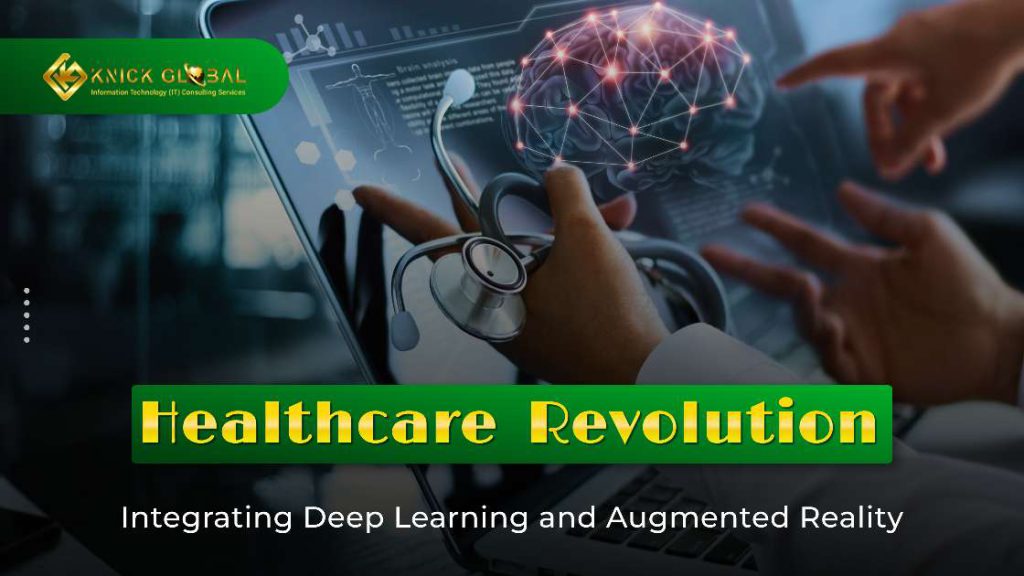
Healthcare Revolution: Integrating Deep Learning and Augmented Reality

We all know how integral technology is to our modern world. Scientific advancements have seamlessly woven themselves into the fabric of our daily lives. Though its full potential is yet to be realized, one thing is clear: we are deeply reliant on technology. In the medical sector, the fusion of artificial intelligence, augmented reality, and machine learning is expanding the horizons of healthcare. The synergy between augmented reality (AR) and deep learning in healthcare is inspiring and transformative, promising significant advancements in medical science. Augmented reality has proven to be crucial in reducing mental stress, offering substantial benefits across various fields, including manufacturing, advertising, education, military service, and healthcare. In medicine, AR technology has revolutionized patient care, from medical training to improving diagnostic accuracy and treatment efficacy. This article aims to highlight the diverse technologies shaping various medical fields. Here’s an in-depth look at how deep learning and AR are reshaping healthcare and driving the medical sector forward in today’s world. Deep Learning in Healthcare Deep learning is revolutionizing healthcare, enhancing patient care, insurance processes, and medical treatment through advanced computational capabilities. To harness the full potential of deep learning in healthcare, integrating AI training, computer vision, and natural language processing is essential. These technologies amplify the ability to learn and innovate in the medical field. High-level deep learning enables the analysis of large datasets, making predictions in medical research, diagnostics, and treatment planning more accurate and efficient. Here are some key applications, benefits, and potentials of deep learning in healthcare: Anatomy Lessons: Deep learning offers immersive simulations for medical students, allowing them to visualize and interact with 3D models of human anatomy. This technology deepens their understanding of complex structures and hone their diagnostic skills. Advanced Imaging: By examining medical images such as X-rays, MRIs, and CT scans, deep learning enhances the detection of abnormalities like tumors, fractures, and infections. These technologies often assist human radiologists, improving accuracy and efficiency. Deep learning’s ability to analyze vast amounts of data and make precise predictions is transforming healthcare, and driving advancements in medical research, diagnostics, and treatment. The potential for innovation in this field is immense, promising a future where technology and healthcare seamlessly integrate to improve patient outcomes and medical practices. Surgical Training: AR-based training systems provide realistic surgical models, allowing students to practice operations in a controlled environment. This hands-on training is crucial for developing skills and confidence in healthcare professionals. Additionally, it instills trust in patients, ensuring they receive the best possible care. Deep learning models assist pathologists in making accurate diagnoses, further enhancing the quality of care. Advanced Visualization: Deep learning models can predict the likelihood of certain diseases by analyzing patient information, including medical records, doctor’s notes, test results, prescriptions, and lifestyle factors. This predictive capability is especially beneficial for managing chronic illnesses such as diabetes and heart disease, allowing for early intervention and personalized treatment plans. Guidance and Recommendations: Deep learning aids surgeons by providing preoperative planning based on detailed anatomical analysis. This surgical guidance helps accurately locate medical issues and target specific regions, reducing the risk of complications. Consulting a trusted doctor or physician before a serious problem arises is always beneficial for overall health and well-being. Physical Therapy: AR apps in physical therapy offer interactive exercises that patients can perform at their convenience. These apps monitor movements and provide real-time feedback, ensuring exercises are done correctly and effectively. This technology enhances patient engagement and compliance with therapy regimens. Pain Management: Deep learning techniques in patient care and management can train medical students to alleviate pain and anxiety during medical procedures. For instance, these skills can help children remain calm during vaccinations or other minor procedures, improving their overall healthcare experience. Medical Records: Using NLP (Natural Language Processing) systems, deep learning can sift through vast amounts of clinical documents and electronic health records (EHRs) to identify critical data. This capability supports healthcare practitioners in making informed decisions during complex and critical situations. Virtual Clinic Treatment: In some instances, deep learning surpasses traditional machine learning in virtual healthcare. AI-based mobile apps like ADA, Babylon, Medical Imaging, and Healthily enable distant experts to participate in patient evaluations and interact directly with medical teams. For example, a doctor can guide a patient through a self-injection or simple health check online, revolutionizing the accessibility and convenience of healthcare. Augmented Reality in Healthcare We are currently witnessing a transformative shift in healthcare driven by augmented reality (AR). AR enhances our interaction with real-world surroundings by adding digital overlays, creating an enriched, interactive experience. Augmented reality is a groundbreaking technology that merges the physical and digital worlds, expanding users’ knowledge and enabling them to interact within a highly sophisticated environment. AR is rapidly gaining traction in the healthcare industry and beyond. Its applications span numerous fields, including medical education, surgical procedures, patient support, and overall healthcare delivery. AR technology is utilized across various platforms such as mobile devices, computers, and head-mounted displays (HMDs). Statistics indicate that AR in the global healthcare sector is poised for substantial growth and experiential advancements between 2022 and 2031. The healthcare AR industry, valued at over $1.6 billion in 2022, is projected to soar to $12.2 billion by 2031. We Aim to provide a comprehensive review of state-of-the-art AR implementations and research in healthcare by: Identifying various AR approaches. Recognizing the diverse healthcare areas where AR has been applied. Highlighting current trends and developments. Outlining the AI and machine learning technologies used in AR. Comparing the different visual modes (web, mobile, and head-mounted). This review will illuminate the profound impact of AR on healthcare, showcasing its potential to revolutionize medical education, enhance surgical precision, improve patient care, and drive the future of the healthcare industry. Benefits of Augmented Reality in Healthcare Improved Training and Education: AR provides medical professionals and students with interactive training experiences, enhancing their skills and accelerating their learning curve. This hands-on approach ensures a deeper understanding of complex medical concepts and procedures. Surgical Precision: AR enhances surgical precision and outcomes

How Can You Start a Game Development Company in India
3D Game Development, Game Development, Healthcare Technology

Starting a Game Development Company in India: Your Comprehensive Guide

Starting a game development company in India is an exciting and challenging endeavor. It requires meticulous planning, unwavering dedication, and a deep understanding of the gaming industry. Building a reputation and a portfolio of successful games takes time, so patience and persistence are key. Additionally, navigating your location’s legal and financial landscape is crucial for compliance and success. In this detailed guide, we’ll explore the essential steps to help you launch your game development company in India, along with expert insights from Knick Global to ensure your journey is both smooth and rewarding. 1. Conducting Market Research and Crafting a Business Plan Market Research: Before diving into the game development industry, conduct thorough market research to understand the landscape in India. Identify emerging trends, potential niches, target audiences, and key competitors. This research will help you carve out a unique space in the market and tailor your games to meet the specific demands of Indian gamers. Business Plan: Once you’ve gathered sufficient market insights, it’s time to create a comprehensive business plan. This plan should outline your company’s vision, mission, goals, and strategies. Include detailed financial projections, funding requirements, and a roadmap for achieving milestones. A well-thought-out business plan guides your company’s growth and attracts potential investors and partners. 2. Choosing the Right Legal Structure and Registration Legal Structure: Selecting the appropriate legal structure for your game development company is crucial. Options include sole proprietorship, partnership, limited liability partnership (LLP), or private limited company. Each structure has its own advantages and implications, so consult with legal professionals to make an informed decision that aligns with your long-term goals. Registration: Register your company with the relevant government authorities, such as the Registrar of Companies (RoC) for private limited companies. Ensure that all necessary licenses and permits are obtained, and comply with any industry-specific regulations. 3. Securing Funding and Managing Finances Funding Sources: Determine the best way to finance your game development company. Options include personal savings, bank loans, angel investors, venture capital, and government grants. Each funding source comes with its own set of conditions, so choose one that aligns with your company’s vision and financial needs. Budgeting: Create a detailed budget that accounts for initial startup costs, ongoing expenses, and game development costs. This budget should also include marketing and promotional activities to ensure your games reach the right audience. 4. Selecting Location and Setting Up Infrastructure Location: Choose a location that best suits your company’s needs. This could be a physical office space or a virtual workspace, depending on your team’s preferences and operational requirements. Consider factors such as accessibility, cost, and the availability of local talent. Infrastructure: Set up the necessary infrastructure, including high-performance computers, software licenses, development tools, and other essential equipment. Ensure that your team has access to the latest technology and resources to facilitate smooth and efficient game development. 5. Building a Talented Team Hiring Talent: Assemble a team of skilled professionals, including game developers, designers, artists, writers, and marketers. Look for individuals with diverse skill sets and a passion for gaming. If you lack in-house expertise in certain areas, consider outsourcing tasks to specialized freelancers or agencies. Team Culture: Foster a positive and collaborative work culture that encourages creativity and innovation. Regularly engage with your team to ensure they feel valued and motivated. 6. Protecting Intellectual Property (IP) IP Protection: Protect your game’s intellectual property through copyrights, trademarks, and patents if necessary. This prevents unauthorized use or duplication of your work and secures your company’s rights to its creations. 7. Game Development Process Development Phases: Begin the game development process by focusing on your chosen niche and target audience. Develop a timeline and set milestones to track progress. Ensure that your game offers a unique and engaging experience that sets it apart from competitors. Quality Assurance: Implement rigorous testing and quality assurance processes to identify and fix any bugs or issues. This ensures a smooth user experience and helps build a positive reputation for your games. 8. Monetization Strategy Revenue Models: Decide on a monetization strategy for your games. This could include selling games on app stores, offering in-game purchases, running advertisements, or using a freemium model. Choose a model that aligns with your target audience and maximizes revenue potential. 9. Marketing and Promotion Marketing Strategy: Develop a comprehensive marketing strategy to promote your games. This may include creating a website, using social media, attending gaming events, and collaborating with influencers. Highlight your game’s unique features and create engaging content that resonates with your target audience. Partnerships: Consider partnerships with game publishers or platforms to expand your reach and gain credibility in the industry. 10. Launch and Distribution Game Launch: Prepare for the official launch of your game, ensuring it meets all platform requirements and standards. Develop a launch plan that includes marketing activities, press releases, and promotional events. Distribution Channels: Distribute your game through app stores, online platforms, or your own website. Leverage multiple distribution channels to reach a broader audience and maximize your game’s visibility. 11. Post-launch Support and Continuous Improvement Ongoing Support: Provide ongoing support and updates to your games to keep players engaged and address any issues that arise. Regularly update your game with new features, content, and improvements based on player feedback. Player Feedback: Gather and analyze player feedback to understand their preferences and pain points. Use this information to make data-driven decisions and continually improve your games. 12. Compliance and Legal Obligations Regulatory Compliance: Ensure that your game complies with all relevant laws and regulations, such as age ratings, data privacy requirements, and consumer protection laws. Stay informed about changes in regulations to avoid legal complications. 13. Revenue Management and Business Growth Financial Management: Keep track of your company’s finances, including revenue, expenses, and cash flow. Use accounting software to manage your finances efficiently and make informed business decisions. Industry Trends: Stay updated with industry trends, new technologies, and market shifts. Adapt your business strategies to stay competitive and capitalize on emerging opportunities. With Knick Global as

Interior Design V-Ray -Knick Global
blockchain game development services, casino game, casino game development, Game Designer, Game Development, Healthcare Technology, Metaverse, NFTs, online casino game, Uncategorized, Unity, Video Game

Enhancing Interior Design with V-Ray- Unleashing Photorealistic Possibilities

In the field of interior design, visualization plays a crucial role in bringing ideas to life. With the advent of advanced rendering software like V-Ray, designers can now create stunningly realistic visual representations of their concepts. In this blog post, we will explore the transformative impact of V-Ray on interior design, unlocking a new era of photorealistic possibilities. The Power of V-Ray in Interior Design V-Ray has emerged as a game-changer and development in the world of interior design, enabling designers to go beyond traditional 2D representations and immerse clients in virtual spaces that mirror reality. With its robust features and unparalleled rendering capabilities, V-Ray empowers designers to achieve breathtaking levels of detail, lighting, and material accuracy. Photorealistic Visualizations V-Ray’s advanced rendering engine allows interior designers to create photorealistic visualizations that closely resemble the final outcome of a project. Through its precise modeling tools, realistic lighting simulation, and high-quality texturing options, V-Ray brings virtual spaces to life with unparalleled accuracy. From intricate textures on materials like wood or fabric to lifelike reflections and shadows, V-Ray enables designers to showcase their vision in stunning detail, leaving clients in awe. Enhancing Lighting and Atmosphere Lighting is a crucial element in interior design, as it sets the mood and enhances the ambiance of a space. With V-Ray, designers have access to a wide range of lighting options, including natural and artificial sources. They can accurately simulate the behavior of light, from sunlight streaming through windows to the warm glow of carefully positioned lamps. By manipulating lighting parameters, 3D Game designers can experiment with different scenarios and find the perfect balance to create the desired atmosphere within a virtual environment. Material Accuracy and Realistic Texturing V-Ray offers a comprehensive material library and advanced texturing tools that enable designers to achieve astonishing levels of material accuracy. Whether it’s the smoothness of marble, the roughness of concrete, or the translucency of glass, V-Ray’s material editor allows designers to replicate real-world materials convincingly. By adjusting parameters like reflectivity, glossiness, and bump mapping, designers can achieve an unprecedented level of realism, enabling clients to envision the final result with remarkable clarity. Conclusion V-Ray has revolutionized the way interior designers showcase their ideas, offering a powerful toolset to create photorealistic visualizations that leave a lasting impression. With its advanced rendering capabilities, accurate lighting simulation, and realistic material representation, V-Ray has become an indispensable asset, transforming interior design into an immersive and breathtaking experience.