Knick Global

Video Game

Navigating the NFT Liquidity Landscape: A Comprehensive Guide
3D Game Development, AR Development, Augmented reality, blockchain game development services, casino game, casino game development, Game Designer, Game Development, Metaverse, NFTs, online casino game, Uncategorized, Unity, Video Game

NFT Gaming: How Blockchain is Transforming the Gaming Industry

The gaming industry has seen too many revolutions-the advent of 3D graphics, the rise in popularity of online multiplayer experiences today, it is blockchain technology, and Non-Fungible Tokens (NFTs). The latter can change the way we engage with and interact with digital worlds in blockchain-based games, adding ownership, transparency, and augmented reality to games.   In this blog post, we look at how blockchain is changing the gaming industry and what benefits could be seen to players and game developers, besides the role of augmented reality in that space. What Are NFTs and Blockchain Games? In order to understand how the blockchain is changing gaming, one must grasp the basic aspects of NFTs. This is unique, digital, on-blockchain items, a sort of decentralized ledger. While bitcoins or Ethereum work as a token, an NFT is unique and nonfungible. In gaming, NFTs represent the ownership of characters, skins, weapons, and virtual land. Blockchain games integrate these tokens into their ecosystem, so people really own those assets rather than just renting them from game developers. Advantages of NFT Gaming Ownership Traditionally, developers own in-game items, and the rights of the player are limited to mere use. Blockchain games overturn this model entirely by giving ownership of assets in their entirety to the players. Players can, therefore, buy, sell, or even lease their NFTs, providing new revenue channels and adding practical value to the game. Interoperability Blockchain supports cross-game and platform interoperability. Imagine a sword owned in one game; it can be used in another game. This is what NFTs deliver. This empowers players with a better gaming experience and encourages cross-game developers’ collaborations. Increased Transparency Blockchain technology ensures transparency and fairness. All transactions are recorded on a public ledger, thus reducing fraud and ensuring that rare items remain truly rare. Players can trust the system without relying on a central authority. Play-to-Earn Opportunities This would be quite interesting to see in blockchain gaming: the “play-to-earn” model, where players get cryptocurrency or NFTs for completing their tasks, leveling up, or winning battles, and could potentially turn gaming into a source of income, especially for developing countries. Augmented Reality Integration Blockchain gaming goes to the next level with augmented reality, or AR, where the real and virtual worlds are combined. With blockchain games that use AR, gamers can interact with NFT assets in the real world for richer experiences. For instance, users can look for NFT treasures in their local neighborhoods or showcase their digital art collections in virtual galleries viewed through AR devices.     Challenges in Blockchain Game Development While the potential of blockchain game development is massive, it has a set of challenges associated with it. High Entry Costs Most blockchain games demand that the player buy NFTs or cryptocurrencies before they can play. This high barrier to entry deters casual gamers and limits the audience. Environmental Concerns Blockchain technology, especially proof-of-work systems, has faced criticism for its environmental impact. However, newer blockchain models such as proof-of-stake have reduced energy consumption significantly. Complexity for New Users Blockchain and cryptocurrency can be intimidating for players who are not familiar with these technologies. Developers need to focus on user-friendly interfaces to bridge this gap. Regulatory Uncertainty The legal status of NFTs and cryptocurrencies varies across regions. Game developers must navigate these complex regulations to avoid potential pitfalls The Future of NFT Gaming The future of blockchain gaming seems pretty promising and more aligned with increased adoption in augmented reality and metaverse integration. The developers are focusing on reducing the entry costs, enhancing scalability, and improving access to attract more users. You would expect much more from AR technology, which could give players real-world interactions with NFTs, like battling virtual monsters in your living room or going to a concert where your ticket is stored in your blockchain wallet. Another trend in gaming is decentralized autonomous organizations. DAOs allow players to vote on decisions within the game. This means a player can now have a voice in the actual development and governance of the game. Conclusion  NFT gaming is more than a trend; it’s a revolution in the making. It combines blockchain’s transparency and ownership with augmented reality’s immersive potential, making the future of gaming more interactive, rewarding, and inclusive than ever before. The possibilities are limitless as developers and players embrace this new era.For more details  Contact us! FAQs  About NFT Gaming What is NFT gaming? NFT gaming is the utilization of non-fungible tokens in the representation of in-game assets. In this, an individual can own, trade, and monetize digital items. Most games supported by blockchain technology are mostly about NFT gaming. How does augmented reality enhance blockchain games? Augmented reality offers another layer of immersion where virtual NFT assets are overlaid in the real world. Players can engage with their games and NFTs in real-world environments, making the game more immersive. Are blockchain games eco-friendly? The early blockchain systems had enormous energy requirements; however, newer models, such as proof-of-stake, can be very sustainable. Developers are increasingly using these more sustainable and eco-friendly solutions. Can one earn money through NFT games?  Yes, many blockchain games offer play-to-earn opportunities in which players can earn cryptocurrency or valuable NFTs to complete tasks or win battles. Are blockchain games secure? Blockchain technology is secure in itself by the decentralized and transparent nature of it. But players need to beware of scams and use only reputable platforms.   

Poker logo by Knick Global: Sleek, modern design for top-tier gaming experiences
3D Game Development, AR Development, casino game, casino game development, Game Designer, Game Development, Healthcare Technology, Metaverse, NFTs, online casino game, Unity, Video Game

How to Develop a clone app like 888Poker?

Developing a clone app similar to 888Poker is an ambitious but rewarding venture. Being one of the leading online poker platforms, 888Poker has raised the bar on user experience, game variety, and reliability. To replicate the success of this application, one must plan and develop it carefully while following all regulations in marketing it. This blog outlines how to build a poker app through discussions of Android and iOS game development, gambling game compliance, and more. 1. Poker App Planning Know Your Market You will research the online poker market to find your target audience, competitors, and trends. Identify what makes 888Poker successful: its game modes, user interface, and promotional strategies. Core Features Your poker app should include the following: Game Variety: Texas Hold’em, Omaha, and tournaments should be included. Real-Time Multiplayer: Allows smooth gameplay among users across the globe. Secure Payment Options: Enable easy deposits and withdrawals. Engaging User Interface (UI): make it simple to navigate while making it pretty. Cross-Platform Compatibility: enable play on the web, iOS, and Android. Compliance and Licensing Adhere to gambling Game regulations in your target markets. Obtain relevant licenses, such as those issued by the UK Gambling Commission, Malta Gaming Authority, or similar. 2. Best Technologies Live Multiplayer Gaming Implementations with PUN, Firebase Realtime Database, or Socket.IO are great examples of real-time multiplayer gaming technologies. These libraries ensure that all the actions done by the player are synchronized with others, maintain latency, and hence give a lag-free experience. Game Engine Cross-platform development is done with Unity and Unreal Engine, which offer all the tools required for deep 3D graphics and animation, making sure they have good performance on Android game development, iOS, and web platforms. Server-Side Coding For server-side scripting, use Node.js or Python. Implement databases like MongoDB or PostgreSQL to store user data. Scale up through cloud platforms, such as AWS or Google Cloud. Security Protect user information through end-end encryption and SSL certificates. Develop anti-fraud measures against cheating and fraud to play fair. 3. How to Develop Your Poker Application Prototyping and UI/UX Design Wireframe and mock up the layout of the app. The interface needs to be intuitive, targeting novice as well as experienced players. Figma and Adobe XD are good tools to get this done. 2. Development Frontend Development: Cross-platform development: React Native or Flutter Backend Development: API for authentication, game rule, payment processing Game Logic: Poker rules with hand rankings and dealer requirements have to be incorporated appropriately with efficient algorithms. 3. Testing The application should be tested adequately to identify bugs and remove them completely. It can be tested through automated tools like Appium and TestFlight and also through manual testing. 4. Launch and Maintenance Publish the app in the Google Play Store and Apple App Store. Improve the app by incorporating new features and security patches as received through user feedback. 4. International Gambling Regulation Compliance Compliance is a necessity for a gambling application. The important steps are as follows: License: Obtain the license to conduct gambling in every targeted region. Age Verification: Have strong mechanisms for age verification to prevent underage gambling. Fair Play: Use RNGs certified by recognized agencies. Data Protection: Follow GDPR, CCPA, and other data protection laws. 5. Creating an Engaging User Interface An engaging UI can differentiate your app from others. Here are some tips: Visual Appeal: Use high-quality graphics and animations to create a realistic poker environment. Easy Navigation: The application should ensure easy navigation for the users to games, tournaments, and account settings. Customizations: Allow the user to personalize avatars, tables, and game settings. Feedback: Integrate haptic feedback and sound effects for the ultimate gaming experience. 6. Marketing Strategies Engagement of Gamers Social Media Campaigns: Promote your app on Facebook, Instagram, and Twitter. Influencer Partnerships: Partner with poker influencers and streamers to reach a large audience. Referral Programs: Reward the current users to invite friends by providing them with incentives. Retention of Gamers Loyalty Programs: Reward the frequent players with bonuses and special perks. Updating Routine: Add and release new game modes and exciting features to be able to get new freshness going throughout the app. Push Notifications Updating users about tours, offers, and updates. 7. Secure Payments Introducing payments that are protected will help raise trust with users.  Payment Gateways Use tried ones such as PayPal, Stripe, or Razor Pay. Cryptocurrencies In this case Bitcoins and Ethereum work Fraud prevention The best way this application would be would be to add multi-factor authentification besides the transaction alert. Follow these steps and strategies to help you develop a robust and engaging poker app that competes with industry leaders like 888Poker. Frequently Asked Questions Q. Which technologies you would recommend to implement real-time multiplayer gaming for poker apps? The above-mentioned technologies, are Firebase Realtime Database, and Socket. IO-are the best due to low latency and scalability to support real-time multiplayer games. Q. How would I create a cross-platform poker application for web, iOS, and Android? Use cross-platform development game engines such as Unity or Unreal Engine, and combine these with frameworks such as React Native or Flutter for a seamless integration across devices. Q. What should be done to comply with international gambling regulations? Obtain the necessary licenses, implement age verification, ensure RNG certification, and comply with data protection laws like GDPR and CCPA. Q. How can an engaging and intuitive user interface for a poker app be created? Visual appeal, easy navigation, and customization options are key. Use feedback mechanisms such as haptic responses and sound effects to enhance the user experience. Q. What marketing strategies can help attract and retain players in a competitive poker market? Social media campaigns, influencer partnerships, referral programs, and loyalty rewards can attract and retain players. Q. How do I implement secure payment methods for deposits and withdrawals in the app? Use trusted payment gateways like PayPal, Stripe, or Razorpay. Provide multi-factor authentication and track transactions for fraud prevention.

A-Complete-Guide-to-Initial-Game-Offerings with Blockchain development
3D Game Development, AR Development, casino game, casino game development, Game Designer, Game Development, online casino game, Unity, Video Game

Blockchain Gaming or Game Development: The Future in 2025

As we enter 2025, something revolutionary is seen in the realm of gaming technology, spearheaded by blockchain progress. Blockchain game development is no longer alone in shaping the future of the interactive entertainment scene; rather, it’s blended with the other two developments Android game development and iOS game development. Read on to explore how blockchain redefines gaming, and what these changes mean to developers and end-users. The Emergence of Blockchain Games Blockchain gaming is a decentralized technology that brings about unique experiences to the players.  Some Key Features of Blockchain Games: Real Ownership of Assets: The assets of in-game items, such as characters, weapons, and skins, can be owned as NFTs by the players. They can be sold or traded out of the game environment, hence, giving players real-world value for their digital items. Decentralized Economy: The blockchain games operate on a decentralized economy. In this model, players earn cryptocurrency through playing and create a P2E model. Interoperability: Assets of a blockchain game can be frequently reused in another blockchain game because of standardization protocols. Transparency and Security: Smart contracts make the game fair, and fraud cannot occur, making the gaming experience trustworthy. Impact of Blockchain on Android and iOS Game Development Blockchain has altered the complexion of mobile gaming. This high-integrating industry is mobile gaming, and let’s see how blockchain changes the face of Android game development and iOS game development. Improve User Experience Blockchain allows developers to create more engaging and rewarding experiences in gaming. For instance, mobile games have tokenized rewards that can be traded or withdrawn as real-world currency. Streamlined Monetization Blockchain offers new monetization streams to mobile game developers. In-app purchases by cryptocurrency and NFT marketplaces offer sustainable streams of revenue for developers, with value also delivered to players. Security and Fairness Blockchain technology brings robust security protocols into the development of both Android and iOS games. Smart contracts ensure fair play and protect data about players to build trust and loyalty. Trends in 2025 Game Development The confluence of blockchain technology with Android and iOS game development is giving rise to a few trends: Play-to-Earn (P2E) Models Play-to-earn games are no longer a niche market. Today, they stand as the dominant trend in 2025 with millions of gamers worldwide. Such games reward cryptocurrency or NFTs to the players for doing specific tasks achieving certain milestones or winning in tournaments. Cross-Platform Compatibility The developers aim to develop blockchain games development that can be cross-platform compatible. That, therefore means game development that can be compatible with Android, iOS, and PCs ensures seamless gaming and increases the player base. Gamification Application in Other Nongaming Sectors Community-Driven Development Challenges and Opportunities Challenges: Scalability: High transaction costs and network congestion can hinder the performance of blockchain games. Regulatory Uncertainty: Still, the governments of the world are figuring out the regulations on cryptocurrencies and NFTs, so that continues to be uncertain for developers. User Education: Most users are unaware of blockchain technology; therefore it’s up to the developers to keep the interfaces user-friendly and offer educational material. Opportunities: Innovative Game Mechanics: Blockchain allows the developer to try out new game mechanics such as tokenized rewards and player-driven economies. Expanding Markets: The potential market for blockchain-based Android and iOS games is quite enormous, owing to the increasingly growing trend of smartphone usage. Partnerships and Collaborations: Blockchain platforms would enable developers to utilize advanced tools and resources that speed up the development process. Learn Blockchain Basics: Learn about blockchain, smart contracts, and NFTs. Leverage Game Engines: Develop games with game engines like Unity or Unreal Engine, which supports blockchain integration. Focus on user experience: One should make the game simple and easy to operate to attract more users. Conclusion  Blockchain integration into mobile games created unprecedented opportunities for developers and gamers. From actual ownership of game assets to novel play-to-earn models, the possibilities go on and on. Success for developers is improving the technology and solving the issues it brings to develop those games that get close to players’ hearts. The future of gaming now lies in the blockchain. Will you join in? Contact us for more details!

ios game development
3D Game Development, Game Designer, Game Development, Unity, Video Game

iOS Game Development: A Gateway to Engaging Mobile Experiences

Mobile gaming has surged in popularity, with millions of users turning to their smartphones for entertainment. Among the various mobile platforms, iOS stands out as a premium ecosystem for game development. With the power of cutting-edge hardware, a refined user experience, and access to a lucrative marketplace, iOS game development is a golden opportunity for developers and companies to build successful mobile games. In this blog, we’ll explore the significance of iOS game development, the various iOS game development services available, and what to look for in an iOS game development company. The Rise of iOS Game Development The Apple ecosystem, particularly with iPhones and iPads, has long been a favorite for developers. One of the key reasons is the technical capabilities of iOS devices. Each iPhone or iPad iteration brings improved processing power, graphics performance, and enhanced storage, which gives developers the tools they need to create highly engaging games. The App Store, where iOS games are distributed, is renowned for its strict quality control, ensuring that only the best games are showcased to users. In the iOS ecosystem, games have a broad range, from hyper-casual games with simple mechanics to immersive 3D games that push the limits of mobile hardware. This diversity is a result of the rich development environment Apple offers. What is iOS Game Development? iOS game development is the process of designing, building, testing, and deploying games specifically for Apple devices, like the iPhone and iPad. Developers use a variety of tools, including Apple’s proprietary programming languages (like Swift) and frameworks (such as SpriteKit and Metal), to create games that can take full advantage of the hardware. iOS game development includes several stages: Concept and Design – Before any coding begins, developers define the concept of the game, create storylines (if applicable), and design the game environment, characters, and overall gameplay. Development – Using programming languages such as Swift or Objective-C, developers write the code that dictates how the game functions. Tools like Xcode, Apple’s integrated development environment (IDE), help streamline this process. Testing – Games must be tested rigorously to identify and fix bugs or glitches. This ensures that the game runs smoothly on different iOS devices and meets Apple’s stringent standards for quality. Launch and Maintenance – Once the game is developed, it’s released on the App Store. After the launch, continuous maintenance is necessary to address user feedback, patch bugs, and release updates or additional content. Essential iOS Game Development Services Developing a successful game involves more than just coding. There are various iOS game development services available that help optimize every phase of game creation: Game Design: Designing the visuals, user interface, and overall gameplay is crucial to the success of a game. A good iOS game design service focuses on making the game intuitive and visually appealing while also creating an enjoyable experience for the players. Prototyping and Conceptualization: Before full development begins, developers often create a prototype of the game. This allows them to refine the game mechanics and see how it will function in real-time. Prototyping helps ensure that the final product meets the desired goals and is fun to play. Custom iOS Game Development: Each game has unique requirements. Whether it’s an indie game or a more complex multiplayer platform, custom game development services tailor the game to specific needs, ensuring that it stands out in a crowded marketplace. Cross-Platform Development: Many developers want their game to work on more than just iOS. Cross-platform game development ensures that a game can be ported easily to Android or even desktop systems. However, even in cross-platform projects, optimizing the game for iOS devices remains a key focus. Monetization and In-App Purchases (IAP): Developers can choose various business models to monetize their games, such as freemium, ads, or in-app purchases. Integrating these models correctly into a game can help it generate revenue while still providing value to players. Game Testing and QA: Quality assurance (QA) services ensure that a game is free from bugs and glitches before release. Game testing on different iOS devices is critical, as each device might have different hardware configurations that can affect game performance. App Store Optimization (ASO): Once the game is developed, it needs to be marketed correctly to be successful. ASO services help improve a game’s visibility in the App Store through optimized descriptions, keywords, and appealing visuals like icons and screenshots. Post-Launch Support and Updates: A game’s lifecycle doesn’t end with its release. Continuous post-launch support and updates are crucial to keeping a game fresh and engaging. Regular updates can include bug fixes, performance enhancements, and additional content like new levels or characters. Why Partner with a Professional iOS Game Development Company? Choosing the right iOS game development company is crucial to a game’s success. Whether you are an indie developer with a vision or a business aiming to expand into the mobile gaming industry, working with professionals can make a significant difference. Here are some reasons to consider: Expertise in iOS Ecosystem: A professional iOS game development company has in-depth knowledge of Apple’s frameworks, tools, and hardware. This ensures that your game will be optimized for iOS devices, delivering the best possible user experience. Full-Cycle Development: Many companies offer full-cycle development services, which means they handle everything from initial concept to post-launch updates. This saves time and ensures that the game’s development stays consistent and aligned with the vision from start to finish. Experienced Teams: An experienced iOS game development company typically has a multidisciplinary team of game designers, developers, artists, and testers. This helps cover all aspects of the game, from technical performance to user engagement and design. Cost Efficiency: While it may seem like a significant investment to hire an iOS game development company, in the long run, it often proves cost-efficient. They can minimize the trial-and-error phase, avoid costly mistakes, and deliver a game that’s market-ready. Access to Cutting-Edge Technologies: Professional iOS game development companies stay up-to-date with the latest technologies, trends, and updates in the Apple

3d game development
3D Game Development, Game Development, Healthcare Technology, Video Game

Unveiling the Future of Gaming: 3D Game Development and its Revolution

The world of gaming has experienced remarkable growth over the years, transforming from pixelated characters on simple screens to immersive 3D worlds where players can dive into a realistic and thrilling experience. At the heart of this revolution is 3D game development, a process that brings life to games, making them engaging and visually appealing. As technology advances, the demand for 3D game development services continues to skyrocket, with both casual gamers and professional players expecting high-quality gaming experiences. Whether it’s for PC, console, or mobile platforms, 3D games dominate the market. In this blog, we will explore the intricacies of 3D game development, the specific needs of 3D mobile game development, and how professional 3D game development companies offer cutting-edge services that cater to the evolving demands of the gaming industry. Understanding 3D Game Development: The Foundation of Immersive Experiences 3D game development is the process of creating games that utilize three-dimensional space. Unlike 2D games that operate on flat planes, 3D games have depth, allowing players to interact with objects and characters in more realistic environments. Key Elements of 3D Game Development: Modeling: The process of creating 3D characters, environments, and objects. Animation: Giving movement to these characters and objects to make them appear lifelike. Physics Engines: Simulating real-world physics to ensure that interactions between characters and environments are natural. Lighting & Texturing: Adding realism by using advanced lighting techniques and surface textures. Scripting & Programming: Implementing the logic and mechanics of the game. By combining these elements, 3D game development services create engaging and immersive experiences that players can lose themselves in. The success of games such as Fortnite, Call of Duty, and FIFA lies in their ability to merge high-quality 3D graphics with dynamic gameplay. The Rise of 3D Mobile Game Development As smartphones and tablets have evolved, mobile games have seen a significant leap in quality and performance. While the mobile gaming market was once dominated by simple 2D games, advancements in hardware now allow for complex 3D mobile game development, which is reshaping the landscape of mobile entertainment. Why 3D Mobile Games are Gaining Popularity: Immersive Gameplay: The introduction of 3D elements makes mobile gaming much more engaging and interactive. Improved Hardware: With the release of high-powered smartphones, developers can now build detailed 3D environments without compromising performance. Augmented Reality (AR): Technologies like AR (used in Pokémon Go) are bringing a new dimension to mobile gaming by blending the virtual with the real world. Increased User Retention: The more immersive and visually appealing a game, the more likely users are to return and spend money in-game. Developing 3D mobile games comes with unique challenges, including optimizing for different screen sizes and maintaining performance on less powerful devices. However, professional 3D game development services address these challenges with expertise, ensuring that games run smoothly and deliver high-quality visuals. Choosing the Right 3D Game Development Services for Your Project If you’re looking to develop a 3D game, partnering with a professional 3D game development company is essential. Not all development teams are created equal, and choosing the right service provider can make or break your project. Here are a few key factors to consider when selecting a 3D game development service: 1. Experience in 3D Game Development When choosing a development company, it’s crucial to find one with a proven track record in 3D game development. Experience brings an understanding of the nuances of the industry, as well as insights into what makes a game both enjoyable and technically sound. 2. Technological Expertise 3D game development requires a range of technologies and software, from game engines like Unity and Unreal to modeling tools like Blender and Maya. A proficient 3D game development company should be well-versed in these tools to ensure high-quality outcomes. 3. Platform-Specific Knowledge Different platforms require different approaches. A company that specializes in 3D mobile game development should understand the intricacies of mobile hardware, optimization, and user experience. 4. Creativity and Innovation In a saturated market, your game needs to stand out. Partnering with a company that prioritizes creativity and innovation ensures that your game will have unique mechanics, compelling stories, and innovative features. 5. Post-Launch Support The game development journey doesn’t end at the launch. The right 3D game development services should offer post-launch support, including bug fixing, updates, and content expansion to keep your game fresh and engaging for players. Why Partner with a 3D Game Development Company? While independent game development is possible, hiring a professional 3D game development company offers several advantages. From their deep industry knowledge to cutting-edge tools and techniques, development firms can accelerate the process, increase efficiency, and ultimately, improve the quality of the final product. Benefits of Hiring a Professional 3D Game Development Company: Efficiency: Professional teams streamline the development process with established workflows, ensuring that deadlines are met. Cost-Effective: While hiring a full team might seem expensive, the savings in time, resources, and post-launch fixes often outweigh the upfront costs. Quality Assurance: From testing for bugs to ensuring the game is optimized for various platforms, a professional team will ensure your game is release-ready. Scalability: Need to update your game post-launch? A dedicated 3D game development company will have the resources to scale your game with new content, features, and platforms. The Future of 3D Game Development With technological advancements like AI, virtual reality (VR), and AR continuing to push the boundaries of what’s possible, 3D game development is on an exciting trajectory. The future of gaming will likely see even more immersive experiences, from hyper-realistic graphics to highly interactive environments that react to player decisions in real time. As the demand for immersive games grows, the need for 3D game development services will only expand. Whether you’re aiming to create a blockbuster console game or a captivating mobile experience, aligning yourself with a reliable 3D game development company is essential to bring your vision to life. Conclusion: Elevate Your Gaming Project with Knick Global’s 3D Game Development Services Looking to take your

pc game development
3D Game Development, Game Designer, Game Development, Video Game

Exploring the World of PC Game Development: Creating the Next Gaming Masterpiece

The PC gaming industry has always been at the forefront of technological innovation, pushing the boundaries of what’s possible in interactive entertainment. From expansive open worlds to intricate puzzle games, PC game development offers unparalleled flexibility and creativity, making it a preferred platform for both indie developers and major gaming studios. As the demand for high-quality games continues to rise, so too does the need for professional PC game development services. In this blog, we’ll explore the complexities of PC game development, the services involved in bringing a game to life, and why hiring a specialized PC game development company can make all the difference in creating a successful game. The Evolution of PC Game Development The history of PC games dates back to the early days of computers, with simple text-based games evolving into visually rich and complex experiences. Over the years, the PC has grown into one of the most versatile gaming platforms, boasting superior graphical capabilities, modding potential, and an extensive library of game genres. Key Milestones in PC Game Development: 1980s: The rise of early personal computers led to the development of games like Zork and The Oregon Trail. 1990s: Iconic titles like Doom, Warcraft, and Half-Life set the stage for first-person shooters (FPS) and real-time strategy (RTS) games. 2000s: The introduction of more powerful hardware and 3D graphics engines enabled games like World of Warcraft and The Sims to push boundaries in graphics and online multiplayer gameplay. 2010s and Beyond: Games like The Witcher 3 and Cyberpunk 2077 demonstrated the PC’s ability to handle complex narratives, expansive open worlds, and photorealistic graphics. Today, PC game development continues to thrive, with innovations in virtual reality (VR), artificial intelligence (AI), and cloud gaming reshaping the future of interactive entertainment. Understanding PC Game Development: The Process Behind the Scenes PC game development involves creating games specifically optimized for desktop and laptop platforms. Unlike console games, which are designed for specific hardware, PC games must accommodate a wide variety of configurations, from high-end gaming rigs to lower-end systems. Key Stages of PC Game Development: Conceptualization and Design Every game starts with an idea. Whether it’s an epic fantasy adventure or a minimalist puzzle game, the design phase involves brainstorming, creating storylines, character development, and sketching out the game world. This is also where the core mechanics of the game are defined. Pre-Production During pre-production, developers create prototypes, concept art, and a game design document (GDD) that outlines the game’s scope. This phase also involves selecting the appropriate game engine (e.g., Unity, Unreal Engine) and development tools for building the game. Production The production phase is where the real magic happens. Teams of developers, artists, animators, and sound designers work together to bring the game to life. Key elements of PC game development include: 3D Modeling & Animation: Creating lifelike characters and environments. Game Mechanics: Coding the game’s rules, physics, and interactions. Sound Design: Adding immersive sound effects and original music. Level Design: Building out the game’s levels, challenges, and story progression. 4. Testing and Debugging Once a playable version of the game is ready, it enters the testing phase. Quality assurance (QA) teams run the game on various hardware setups to ensure it performs optimally. Bugs are identified, and fixes are applied to ensure a smooth, enjoyable experience for players. The Role of PC Game Development Services Developing a game from start to finish requires a wide range of skills and expertise, which is where professional PC game development services come into play. These services encompass every aspect of game creation, ensuring that projects are completed on time, within budget, and to the highest standard. Key Services Offered by PC Game Development Companies: Game Design and Prototyping Before jumping into full production, developers often create prototypes to test game mechanics and concepts. A good PC game development company will work with clients to flesh out ideas and provide design expertise to create a well-rounded game concept. Custom Game Development Whether building from scratch or improving upon an existing game, PC game development services cover all aspects of game creation, from concept to coding and visual design. Custom development ensures that every game is tailored to the client’s vision and optimized for the PC platform. 3D Modeling and Animation In today’s gaming market, high-quality visuals are critical. A PC game development company can provide detailed 3D modeling, character animation, and environmental design to bring the game world to life. From realistic physics to motion capture, these services ensure a visually stunning game. Cross-Platform Optimization While PC gaming offers flexibility, it also presents challenges in ensuring the game works across a variety of hardware configurations. Professional PC game development services include optimization for different operating systems (Windows, macOS, Linux) and hardware setups. Testing and Quality Assurance With so many different PC setups, testing is a critical part of game development. QA teams ensure the game runs smoothly on various systems, detecting bugs and performance issues before launch. Choosing the Right PC Game Development Company With so many companies offering PC game development services, it can be challenging to choose the right partner for your project. The following factors are essential when selecting a PC game development company: 1. Experience and Portfolio When looking for a development partner, it’s essential to check their experience in creating PC games. A reputable PC game development company will have a portfolio of successfully launched games, demonstrating their capability to deliver high-quality results. 2. Creativity and Innovation The gaming industry is highly competitive, and standing out requires innovation. A top PC game development company will focus on creating unique mechanics, engaging storylines, and immersive gameplay that sets your game apart from the competition. 3. Communication and Collaboration Game development is a collaborative process. The best development companies prioritize clear communication with clients, ensuring that the project stays on track and the client’s vision is brought to life. Why Invest in Professional PC Game Development Services? Investing in professional PC game development services is essential for

vr
Game Development, Video Game

What Is Human Computer Interaction in VR With ML?

As technology advances, so does the way we interact with it. Gone are the days when keyboards and mice were our primary means of communication with machines. Now, we’re stepping into virtual worlds, where the lines between the physical and digital blur. This evolution brings us to the exciting intersection of Human-Computer Interaction (HCI), Virtual Reality (VR), and Machine Learning (ML). But what exactly is Human-Computer Interaction in VR, and how does Machine Learning play a role?  In this blog, we’ll explore how Human-Computer Interaction in VR is revolutionized by Machine Learning, the challenges and opportunities this presents, and what the future holds for these cutting-edge technologies. The Role of Virtual Reality in HCI Virtual Reality is transforming the way we experience digital content. Instead of merely observing a flat screen, VR immerses users in a three-dimensional environment, allowing for a much richer interaction. This shift from 2D to 3D changes everything about Human-Computer Interaction. In VR, you’re not just a user but a participant. The technology relies on more than just sight and sound. It engages your entire body, using motion tracking and hand controllers to let you interact with virtual objects as if they were real. This brings HCI to a whole new level, where the user experience is not only about usability but also about immersion. Imagine designing a car. In a traditional HCI setup, you might use a computer-aided design (CAD) program on a flat screen. But in VR, you can walk around the car, sit inside it, and even see how it feels to drive it—all before a single physical prototype is built. This is the power of HCI in VR technology. How Machine Learning Enhances HCI in VR? Machine Learning (ML) has revolutionized various fields, and its impact on Human-Computer Interaction (HCI) in Virtual Reality (VR) is no exception. By integrating ML into VR environments, we enhance the way users interact with digital spaces, making experiences more adaptive and personalized. Intelligent Interaction Human-computer interaction in VR becomes more intuitive with Machine Learning. ML algorithms analyze user behaviors and adjust interactions in real time. As you move, gesture, or speak, the VR system learns and responds more accurately, creating a seamless experience that feels natural and fluid. Personalized Experiences Another significant benefit is HCI with Machine Learning in creating tailored VR experiences. ML can track individual preferences and usage patterns, allowing VR environments to adapt to the user’s needs. For example, if a user frequently interacts with certain types of objects or scenarios, the system can prioritize these elements, enhancing overall engagement and satisfaction. Enhanced Accuracy VR interaction with ML improves system accuracy. Machine Learning algorithms can refine gesture recognition and movement tracking, leading to more precise and responsive interactions. This reduces the likelihood of errors and enhances the realism of the VR experience, making it more immersive and effective. By integrating these advanced technologies, we’re paving the way for smarter and more dynamic VR environments. Challenges and Opportunities in Combining HCI, VR, and ML Integrating Human-Computer Interaction (HCI) with Virtual Reality (VR) and Machine Learning (ML) presents a range of exciting possibilities but also several significant challenges. As we push the boundaries of technology, understanding these hurdles and opportunities is crucial for developing effective and innovative solutions. Computational Power and Real-Time Processing One of the primary challenges in merging HCI, VR, and ML is the immense computational power required for real-time processing. VR environments are already demanding on hardware, and adding ML algorithms intensifies these requirements. High-performance computing is essential to handle the data processing needed for smooth and responsive user interactions. Developers must continually optimize their systems to manage the load and ensure seamless performance. Privacy and Data Security Another critical challenge is ensuring user privacy and data security. Machine Learning relies on large datasets to function effectively, which often includes sensitive personal information. As HCI in VR technology evolves, safeguarding this data becomes increasingly important. Implementing robust security measures and transparent data handling practices is essential to maintain user trust and comply with regulations. Innovative Applications and Customization Despite these challenges, the integration of HCI with VR and ML opens up a wealth of opportunities. For example, in gaming, we can expect more immersive experiences tailored to individual player preferences. In healthcare, personalized VR therapy could revolutionize patient treatment by adapting to their specific needs in real time. These advancements highlight the potential for creating highly responsive and engaging virtual environments. By addressing these challenges and seizing the opportunities, we can harness the full potential of HCI in VR technology and drive forward innovative solutions across various industries. Real-World Applications of HCI, VR, and ML The integration of Human-Computer Interaction (HCI), Virtual Reality (VR), and Machine Learning (ML) is not just a futuristic concept—it’s already making waves across various industries. Here’s how these technologies are being applied in real-world scenarios: Transforming Education In the field of education, HCI in VR technology is revolutionizing learning experiences. Virtual classrooms and immersive simulations allow students to engage with content more interactively. Machine Learning further personalizes these experiences by adapting lessons to individual learning styles and performance levels. For instance, if a student struggles with a particular topic, the VR system can provide additional resources and tailored exercises to help them improve. Advancing Healthcare Healthcare is another area where HCI with Machine Learning is creating a significant impact. VR interaction with ML is being used in rehabilitation and therapy. Patients can participate in virtual exercises that are customized based on their progress and needs. ML algorithms analyze the patient’s performance and adjust the difficulty of the exercises in real time, leading to more effective and engaging therapy sessions. Innovating Automotive Design In the automotive industry, VR development combined with ML is enhancing the design process. Engineers use VR to interact with virtual prototypes of vehicles, and ML algorithms analyze their interactions to suggest design improvements. This approach not only speeds up the development process but also helps create more user-friendly and innovative vehicle designs. Conclusion

Virtual Reality
Game Development, Video Game

How We Can Use AI in Virtual Reality?

Virtual Reality (VR) has come a long way from its early days of rudimentary graphics and limited interactivity. Today, it stands at the frontier of technological innovation, offering immersive experiences across various domains, from gaming to education and beyond. But what if I told you that the true potential of VR is only beginning to be unlocked?  Enter Artificial Intelligence (AI), a game-changer poised to revolutionize VR as we know it. This blog explores how AI can transform VR, enhancing everything from virtual environments to user interactions, and why this integration is more than just a technological trend. Understanding AI and VR Artificial Intelligence, at its core, is the simulation of human intelligence in machines. It encompasses various technologies, including machine learning, where systems learn from data and improve over time, and natural language processing, which enables machines to understand and respond to human language. Virtual Reality, on the other hand, immerses users in digitally created environments that simulate real or imagined worlds. The intersection of AI and VR is where the magic happens. Imagine a VR game where the environment changes in real-time based on your actions, or a virtual assistant that not only understands your commands but anticipates your needs. This synergy between AI and VR is not just an enhancement; it’s a complete overhaul of how we experience virtual worlds. Let’s dive deeper into how AI is redefining VR. AI-Enhanced Virtual Environments Adaptive Environments One of the most exciting possibilities AI brings to VR is the creation of adaptive environments. Traditional VR experiences often involve static worlds with predetermined outcomes. AI, however, can breathe life into these virtual spaces by making them responsive and dynamic. For instance, imagine a VR simulation where the virtual landscape evolves based on your in-game decisions, or a VR game that adapts its difficulty based on your performance. AI algorithms analyze user actions and adjust scenarios to keep the experience engaging and relevant. Consider a VR training simulation for emergency responders. With AI, the environment can dynamically change to present new challenges, ensuring that the training remains realistic and effective. This adaptability not only enhances the realism of VR environments but also ensures that users remain engaged and challenged. Realistic Simulations AI can also significantly enhance the realism of VR simulations. Traditional VR graphics, while impressive, often fall short of replicating the intricacies of the real world. AI-driven graphics and physics engines can address this gap by creating more accurate and lifelike simulations. For example, AI algorithms can simulate complex physical interactions, such as the way light diffuses through a translucent object or how materials react under different conditions. In the realm of VR game development, this means more immersive and believable game worlds. Players can experience virtual environments that mimic real-world physics with astonishing accuracy, making the gameplay more engaging and realistic. Intelligent Avatars and NPCs AI-Powered Avatars Avatars are a central component of many VR experiences, from social VR platforms to immersive gaming. AI can elevate these avatars from mere digital representations to intelligent entities that interact with users in meaningful ways. AI-powered avatars can exhibit human-like behaviors and emotions, responding to users’ actions with appropriate reactions and conversations. For instance, in a VR game, an AI-powered avatar could react to a player’s in-game actions with nuanced emotional responses, enhancing the immersive experience. These avatars can also adapt their behavior based on user interactions, creating a more personalized and engaging experience. Non-Player Characters (NPCs) Non-player characters (NPCs) in VR games are often limited by pre-programmed behaviors and dialogues. AI can revolutionize this aspect by introducing complex decision-making capabilities. AI-driven NPCs can learn from interactions with players and adapt their behavior accordingly. This means that NPCs can provide more dynamic and responsive interactions, making the virtual world feel more alive and responsive. Imagine a VR role-playing game where NPCs remember past interactions and change their behavior based on their previous choices. This level of sophistication not only enhances the gameplay but also provides a richer and more immersive experience for the player. Personalized User Experiences Customizable Experiences AI excels at analyzing data and personalizing experiences. In the context of VR, this means that AI can tailor virtual environments and interactions to suit individual preferences. For example, in a VR game, AI can adjust the game’s difficulty level based on a player’s skill and play style, ensuring a challenging yet achievable experience. Moreover, AI can personalize VR experiences by analyzing user behavior and preferences. Whether it’s customizing a virtual shopping experience or tailoring a VR training program to specific needs, AI can make the virtual environment more relevant and engaging for each user. Enhanced User Interaction Natural language processing and gesture recognition are two areas where AI significantly enhances user interaction in VR. AI-powered systems can understand and respond to spoken commands, making it easier for users to interact with the virtual environment. Additionally, gesture recognition allows users to control and manipulate virtual objects with natural movements. For example, in a VR training simulation, users can issue voice commands to interact with virtual tools and equipment, streamlining the training process. In social VR platforms, AI can facilitate more natural and intuitive communication between users, making virtual interactions feel more authentic. Challenges and Future Directions Technical Challenges Despite its potential, integrating AI with VR comes with its own set of challenges. One major issue is the computational power required to run advanced AI algorithms in real-time VR environments. The processing demands of AI, combined with the need for high-quality VR graphics, can strain even the most powerful hardware. Data privacy and algorithm biases are also concerns. As AI systems analyze user data to personalize experiences, it’s crucial to ensure that this data is handled securely and ethically. Additionally, addressing biases in AI algorithms is essential to provide fair and unbiased interactions in virtual environments. Future Trends Looking ahead, the integration of AI and VR promises exciting advancements. We can expect more sophisticated AI-driven interactions, including highly responsive NPCs and avatars that can

play to earn
3D Game Development, AR Development, Augmented reality, blockchain game development services, casino game, casino game development, Game Designer, Game Development, Healthcare Technology, Metaverse, NFTs, online casino game, Uncategorized, Unity, Video Game

What Is Play To Earn Games in Blockchain and How It’s Better Than Normal Games?

In recent years, the gaming industry has witnessed remarkable technological advancements, evolving from simple pixelated graphics to highly immersive digital worlds. One of the most intriguing developments in this evolution is the emergence of Play to Earn (P2E) games powered by blockchain technology.  These games are transforming the way we perceive and interact with digital entertainment, offering players a unique opportunity to earn real-world value through their in-game activities. In this blog, we’ll delve into what play-to-earn games are, how they differ from traditional games, and why they represent a significant leap forward in the gaming landscape. Also, we will know how an ideal blockchain game development company can help you out.  Understanding Play to Earn (P2E) Games Play to Earn (P2E) games are a revolutionary concept within the gaming world, merging entertainment with economic opportunity. At their core, P2E games leverage blockchain technology to create a decentralized gaming environment where players can earn real-world rewards through their gameplay. Blockchain, the technology behind cryptocurrencies like Bitcoin, is a digital ledger that records transactions across a network of computers. In the context of gaming, blockchain provides a transparent, secure, and immutable record of all in-game transactions. This technology enables players to own, trade, and sell in-game assets, such as characters, items, and virtual land, as non-fungible tokens (NFTs). These NFTs hold real-world value and can be bought or sold on various online marketplaces. A prime example of a popular P2E game is Axie Infinity, where players can breed, battle, and trade fantasy creatures called Axis. Each Axie is an NFT, allowing players to earn cryptocurrency through gameplay and transactions. This model not only adds a layer of economic incentive to gaming but also introduces a new level of ownership and engagement. Evolution of Gaming: From Traditional to Blockchain-Based The gaming industry has come a long way since the early days of arcade machines and 8-bit consoles. Initially, games were purely a form of entertainment, with revenue generated through sales and in-game purchases. However, the advent of blockchain technology has introduced a paradigm shift, bringing new possibilities to the table. Traditional gaming has primarily focused on providing entertainment through interactive experiences, with players often limited to in-game currencies and rewards that have no real-world value. The introduction of blockchain technology, however, has added a new dimension to this experience. By utilizing decentralized networks and smart contracts, blockchain has enabled the creation of Play to Earn games, where players can accumulate and trade assets with real-world worth. Key milestones in this evolution include the launch of early blockchain games like CryptoKitties, which demonstrated the potential of NFTs in gaming. As the technology matured, more sophisticated P2E games emerged, offering players a broader range of economic opportunities and deeper engagement with the gaming ecosystem. Advantages of Play to Earn Games Play to Earn games offer several distinct advantages over traditional gaming models, reshaping the landscape of digital entertainment. Economic Benefits: One of the most significant advantages of P2E games is the opportunity for players to earn real money. Unlike traditional games, where in-game achievements have no financial value outside the game, P2E games enable players to earn cryptocurrency through their gameplay. This economic model empowers players to monetize their time and skills, creating a new avenue for income generation. Enhanced Security and Transparency: Blockchain technology provides a secure and transparent environment for transactions. Each in-game asset and transaction is recorded on the blockchain, creating an immutable ledger that prevents fraud and unauthorized alterations. This transparency builds trust among players and ensures that their assets are safe and verifiable. Community and Ecosystem Growth: P2E games foster vibrant player communities by offering financial incentives for participation. This model encourages players to engage more deeply with the game and its ecosystem, leading to stronger communities and more dynamic gameplay experiences. The economic aspect of P2E games also attracts a broader audience, including those who might not typically be interested in traditional gaming. Comparison with Traditional Games When comparing Play to Earn games with traditional games, several key differences highlight the unique advantages of the P2E model. Monetization Models: Traditional games typically rely on upfront costs, in-game purchases, and subscription fees as their primary revenue streams. In contrast, P2E games allow players to earn money through gameplay, asset trading, and other economic activities. This shift from a purely consumption-based model to one that rewards active participation represents a significant departure from traditional gaming practices. Ownership of Assets: In traditional games, in-game assets are usually owned and controlled by the game developer. Players have limited control over these assets and cannot trade or sell them outside the game. P2E games, on the other hand, provide players with true ownership of their in-game assets through NFTs. This decentralized ownership model empowers players to trade, sell, or even invest in their assets, creating new opportunities for financial gain. Player Engagement and Incentives: Traditional games often offer limited financial incentives for players. The primary rewards are in-game achievements, rankings, and virtual items with no real-world value. P2E games, however, provide tangible financial rewards, motivating players to engage more deeply and invest time and effort into their gameplay. This model enhances player motivation and fosters a more committed gaming community. Challenges and Considerations in P2E Games While Play to Earn games offer numerous advantages, they also come with their own set of challenges and considerations. Volatility of Cryptocurrencies: The value of cryptocurrencies used in P2E games can be highly volatile, affecting the financial rewards players receive. Fluctuations in cryptocurrency prices can impact the value of in-game assets and earnings, creating uncertainty for players. This volatility requires careful consideration and risk management for both players and game developers. Regulatory and Legal Issues: The regulatory landscape for blockchain and cryptocurrency is still evolving. Different countries have varying regulations concerning digital assets and gaming, which can affect the operation and legality of P2E games. Game developers must navigate these regulations to ensure compliance and avoid legal complications. Technical Barriers: Blockchain technology can be complex and

Vr games
Game Development, Video Game

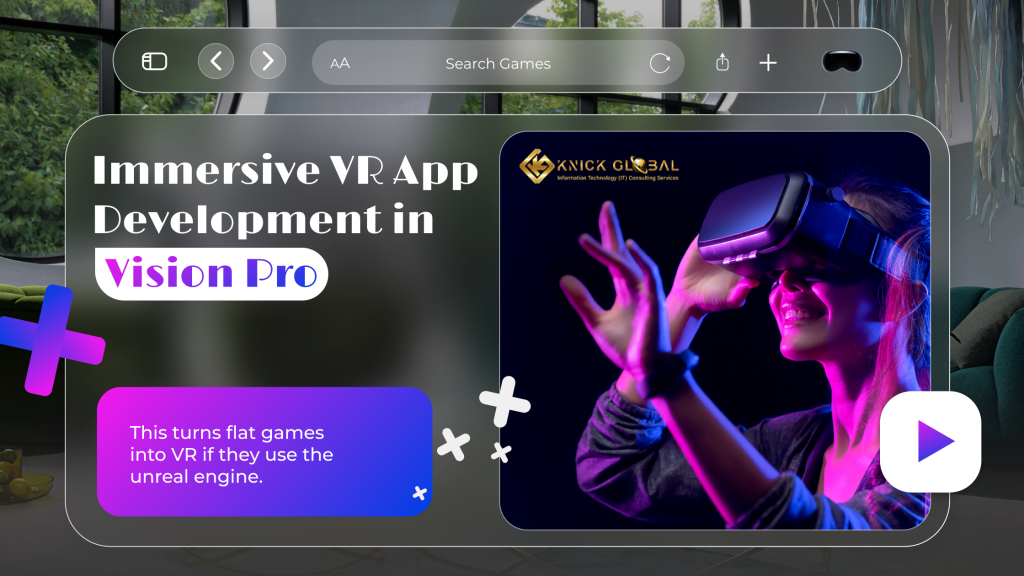
Immersive VR Application Development in Vision Pro

Virtual Reality (VR) has revolutionized the way we experience digital content, offering immersive and interactive environments that engage users like never before. From gaming and education to healthcare and beyond, VR technology is transforming various industries. Among the cutting-edge tools available to developers, Vision Pro stands out as a powerful platform for creating stunning VR experiences. In this blog, we will explore the world of immersive VR application development using Vision Pro, highlighting its unique features, development process, and prospects. Whether you’re a developer looking to dive into VR game development or a business seeking top-notch VR game development services, this guide will provide valuable insights. Let’s embark on this journey into the fascinating realm of Vision Pro and VR. The Rise of Immersive VR Experiences Historical Context and Evolution The concept of VR isn’t new, but it has come a long way since its inception. The journey began with rudimentary attempts at creating immersive environments, evolving through decades of research and technological advancements. Early VR systems were cumbersome and limited in functionality, but they laid the groundwork for the sophisticated systems we have today. As technology advanced, so did the capabilities of VR. The introduction of more powerful processors, high-resolution displays, and sophisticated motion tracking systems has enabled the creation of more realistic and engaging VR experiences. Today, we have reached a point where VR can simulate real-world environments with stunning accuracy, making it an invaluable tool in fields ranging from gaming to medical training. Current Market Trends and Opportunities The VR industry has seen exponential growth in recent years, with a significant increase in both consumer and enterprise applications. According to market analysts, the global VR market is expected to reach billions of dollars in the coming years, driven by advancements in technology and growing consumer interest. The demand for immersive experiences is particularly strong in the gaming industry, where players seek more engaging and interactive gameplay. VR game development has become a thriving sector, with a plethora of VR game development companies offering specialized services. Beyond gaming, VR is also making waves in education, healthcare, and real estate, providing immersive learning, training, and visualization solutions. The opportunities in the VR space are vast and varied. Businesses and developers can tap into this growing market by creating innovative VR applications that cater to diverse needs. Whether it’s developing immersive games, educational content, or therapeutic applications, the potential is immense. Vision Pro: A Game-Changer in VR Development Key Features of Vision Pro Vision Pro is a state-of-the-art VR development platform that offers a range of features designed to empower developers and enhance user experiences. One of the standout features of Vision Pro is its high-resolution displays, which deliver crisp and clear visuals. This is crucial for creating immersive environments where users can feel truly present. In addition to superior visual quality, Vision Pro also boasts advanced tracking and interaction capabilities. It supports a wide range of input methods, including hand tracking, motion controllers, and eye tracking, allowing for more natural and intuitive interactions. This versatility makes it an ideal platform for developing diverse VR applications, from games to training simulations. Another notable feature of Vision Pro is its integration with other cutting-edge technologies such as artificial intelligence (AI) and augmented reality (AR). This allows developers to create more dynamic and interactive experiences, blending the virtual and real worlds in innovative ways. Benefits of Using Vision Pro for Developers For developers, Vision Pro offers a host of benefits that streamline the development process and enhance creativity. The platform provides a comprehensive set of development tools and resources, including an easy-to-use SDK, extensive documentation, and a supportive community. This makes it accessible to both seasoned developers and newcomers to VR game development. One of the key advantages of Vision Pro is its flexibility. The platform is compatible with a wide range of hardware, from high-end VR headsets to more affordable options, making it possible to reach a broad audience. This scalability is particularly beneficial for a VR game development company looking to create games that can be enjoyed by as many people as possible. Moreover, Vision Pro’s robust performance ensures that applications run smoothly and efficiently, providing users with a seamless and immersive experience. This is critical in VR, where any lag or glitch can break the sense of immersion. Developing Immersive VR Applications with Vision Pro Understanding the Development Environment The first step in developing VR applications with Vision Pro is setting up the development environment. Vision Pro offers a user-friendly SDK that includes all the necessary tools and libraries for creating VR content. The SDK is compatible with popular programming languages and frameworks, such as C#, Unity, and Unreal Engine, making it accessible to a wide range of developers. Once the development environment is set up, developers can begin designing their VR applications. This involves creating 3D models, animations, and textures, as well as programming the interactions and logic that will bring the virtual world to life. Vision Pro provides a range of tools and resources to assist with this process, including asset libraries, tutorials, and sample projects. Designing for Immersion Creating an immersive VR experience involves more than just impressive graphics. It requires careful consideration of various factors, including spatial audio, realistic visuals, and interactive elements. Spatial audio, for example, is essential for creating a sense of presence and enhancing the realism of the virtual environment. By simulating the way sound travels in the real world, spatial audio can help users feel more immersed in the VR experience. Visuals are also a crucial component of immersion. High-quality textures, realistic lighting, and detailed 3D models can make a virtual environment feel more real and engaging. However, it’s important to strike a balance between visual quality and performance, as overly complex graphics can strain the system and lead to lag or other issues. Interactivity is another key element of immersive VR. Allowing users to interact with the environment and objects in natural and intuitive ways can greatly enhance the